For years, the phrase “AI implementation” was enough to make non-technical department heads break into a cold sweat. It typically signaled six-month timelines, specialized data science teams, and budgets that only the Fortune 500 could stomach. But the landscape of work has reached a tipping point. We are moving from the era of “AI as a tool” to “AI as a teammate,” and the barrier to entry has finally collapsed.
Enter monday.com’s Agent Factory. This isn’t just another integration or a simple chatbot add-on. It is a no-code ecosystem that allows any business user—from an HR coordinator to a Sales lead—to build, train, and deploy autonomous AI agents. These agents don’t just “assist” by answering questions; they execute complex, multi-step workflows across your entire digital stack. By removing the requirement for Python scripts and API expertise, monday.com is effectively democratizing the most powerful technology of our generation.
From Static Workflows to Autonomous Agents
To understand the leap Agent Factory represents, we have to look at the limitations of traditional automation. Standard “If-This-Then-That” (IFTTT) logic is brittle. If a customer sends an email that doesn’t fit a specific template, or if a project update arrives out of order, the automation breaks. It requires a human to step in and fix the “plumbing.”
AI Agents are different because they possess reasoning. Instead of following a rigid flowchart, an agent is given a mission. For example, instead of a rule saying “If email contains ‘Invoice’, move to folder,” an agent is told: “You are a Billing Assistant. Monitor this inbox, identify invoices, verify they match our project codes, and flag any discrepancies to the Finance lead.”+1
The agent understands the context, handles the nuances of human language, and makes decisions based on the goal it was assigned.
Key Takeaway #1: Traditional automation follows rules; AI agents follow outcomes. This shift allows teams to automate processes that were previously “too human” or complex for software to handle.
Inside the Factory: How Non-Technical Teams Build AI
The “magic” of Agent Factory is its interface. It replaces the IDE (Integrated Development Environment) with natural language and intuitive sliders. You don’t “program” an agent; you “onboard” it.
1. Define the Role and Mission
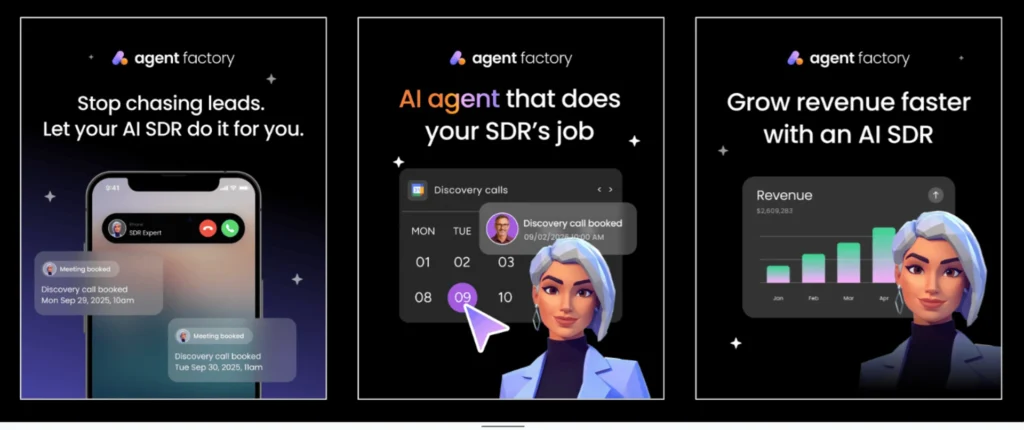
Building begins with a simple description. You give your agent a Persona and a Mission. You might type: “You are an SDR Expert. Your mission is to qualify incoming leads from our website and schedule discovery calls for the sales team.”+1
2. Equip with Skills and Tools
An agent is only as useful as the tools it can use. Through a point-and-click interface, you grant your agent access to your tech stack. You can connect it to:
- Communication: Slack, Gmail, Microsoft Teams.
- Planning: Google Calendar, monday.com boards.
- Data: PDFs, spreadsheets, or web search capabilities.
3. Fine-Tune the Personality
This is where the democratization of AI gets practical. Agent Factory includes sliders to adjust the agent’s Tone and Behavior. Do you want your “Support Specialist” agent to be concise and formal? Or warm and empathetic? You can literally slide the scale to match your brand voice, ensuring the AI feels like a natural extension of your team.
4. Human-in-the-Loop Controls
Democratization doesn’t mean losing control. Agent Factory allows you to set “Checkpoints.” For high-stakes tasks—like sending a contract or approving a budget—you can require the agent to pause and ask for human approval before the final action is taken.
5 Ways Agent Factory is Reducing the “Grind”
| Agent Type | What it Does | Business Impact |
| SDR Expert | Qualifies leads, handles follow-up emails, and books meetings based on your calendar. | Increases lead conversion by 40% without increasing headcount. |
| Briefing Curator | Scans your boards and emails to send you a personalized “Daily Brief” of what matters most. | Saves an average of 45 minutes of “morning catch-up” time daily. |
| Dev Stand-up Coordinator | Pings devs in Slack for updates, identifies blockers, and generates a status report. | Eliminates the need for manual status-chasing and tedious data entry. |
| RSVP & Event Agent | Calls or emails guests to confirm attendance and updates the guest list in real-time. | Dramatically reduces administrative overhead for marketing and HR events. |
| Trends Analyst | Researches the web for industry news and distills it into actionable insights for the team. | Keeps the organization competitive without requiring manual research hours. |
Real-World Use Case: The Autonomous HR Coordinator
Consider the onboarding process for a new hire. Traditionally, this is a “fragile” workflow. It involves sending forms, chasing signatures, answering “Where do I park?” emails, and notifying IT to set up a laptop. If a candidate delays a form, the whole sequence stalls.
With Agent Factory, a “New Hire Success Agent” takes ownership of the entire outcome. It talks to the new hire, recognizes when a document is missing, sends a friendly reminder, and answers procedural questions in real-time. It doesn’t need a developer to program every “what if” scenario; it simply knows its mission is to get the employee ready for Day 1.
Key Takeaway #2: By empowering “Citizen Developers”—business users who know the process best—Agent Factory ensures that AI solutions are practical, relevant, and instantly adopted.
The Future: A Digital Workforce for Every Department
The launch of Agent Factory signals a move toward Multi-Agent Workflows. In the near future, we won’t just have one agent; we will have “squads.” A Marketing Agent might identify a trend, a Content Agent drafts a post about it, and a Legal Agent reviews it for compliance—all working in parallel within your monday.com environment.
For business leaders, the opportunity is clear: Scale without burnout. AI agents absorb the increased volume of work, allowing your human talent to stay focused on high-level strategy, creative problem-solving, and relationship building.
Getting Started: Deploy Your First Agent Today
You don’t need a strategy consultant to start. Follow these three steps:
- Identify the “Noisy” Tasks: Look for the processes that require constant manual “pings,” follow-ups, or data moving.
- Start with a Template: Use one of the ready-made templates in the Agent Factory (like the SDR or Meeting Prep agent) to see immediate value.
- Iterate Based on Feedback: AI agents are learners. Monitor their initial actions, refine their instructions in plain English, and watch them become more effective every week.
The era of waiting for IT is over. With Agent Factory, the power to automate complexity is now in your hands.