For decades, the “software developer” was the gatekeeper of innovation. If a team lead had a brilliant idea for a custom tracking tool or a niche dashboard, they had to submit a ticket, wait for a sprint cycle, and hope the end result matched their vision. But a new phenomenon known as “Vibe-Coding” is dismantling those gates, and monday.com is leading the charge with a tool that has already empowered users to build over 17,000 custom applications—all without a single line of syntax.
The term “vibe-coding” (popularized by tech visionaries like Andrej Karpathy) describes a shift where the “vibe”—the intent, the goal, and the plain-English description—becomes the primary source code. With the official launch of monday vibe, the platform has turned this trend into a scalable enterprise reality.
What is Vibe-Coding? The Shift from Logic to Intent
Traditional coding is a translation job: you take a human problem and translate it into a language a machine understands (Python, Java, C++). Low-code and no-code tools simplified this by using visual blocks, but they still required “logical thinking”—understanding loops, variables, and if-then statements.
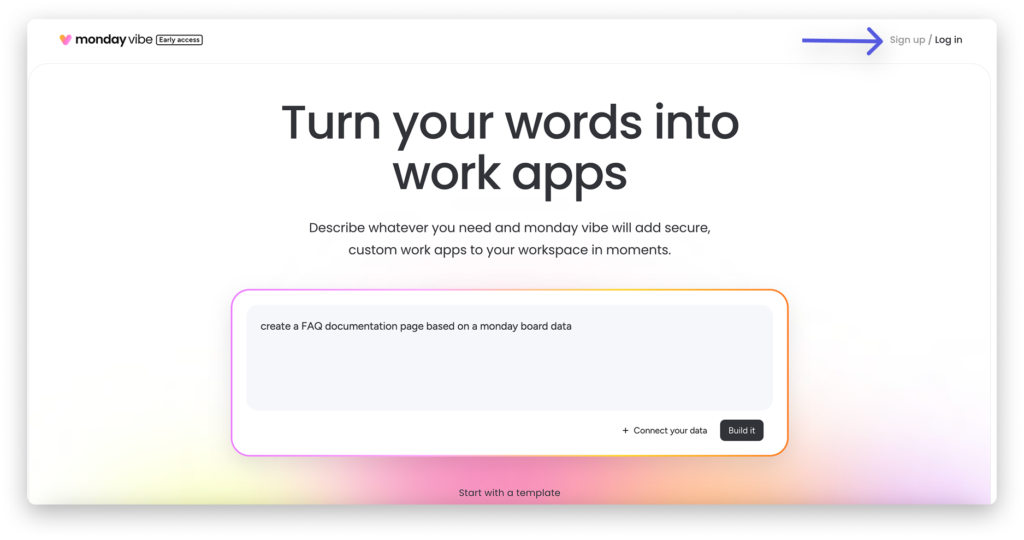
Vibe-coding removes the translation layer entirely. Instead of building a logic tree, you describe the end state. On monday.com, this looks like typing a prompt: “Build me a professional-looking dashboard for a marketing team of 25 that tracks time spent on campaigns and highlights who is over capacity this week.” The AI doesn’t just “help” you; it interprets the context of your existing data, designs the UI using the Vibe Design System, writes the necessary secure code, and installs the functioning app directly into your workspace.+1
The Metrics of a Movement: 17,000+ Apps and Counting
The speed of adoption is the most startling part of this story. By late 2025, over 17,000 apps had been built using monday vibe. This isn’t just a win for monday.com; it represents a fundamental shift in how businesses view software.+1
- Speed to Value: Typical app development takes weeks or months. Vibe-coded apps on monday.com are often functional in under two minutes.
- Hyper-Localization: Most of these 17,000 apps aren’t “mass market” tools. They are “micro-apps”—solutions for a single team’s specific problem that would have been too small to justify an IT budget but are now vital to that team’s daily flow.
- Democratized Innovation: The creators of these apps aren’t “techies.” They are HR managers, site foremen, and retail leads. This “Citizen Developer” movement ensures that the people closest to the problems are the ones building the solutions.+1
Key Takeaway: Vibe-coding hasn’t just replaced the developer; it has replaced the developer bottleneck. Innovation can now move at the speed of a conversation.
3 Pillars of the monday.com Vibe-Coding Approach
- Context-Aware Intelligence: monday vibe doesn’t work in a vacuum. It connects to your existing boards and data. When you ask it to “show trends,” it knows which columns are your “Budgets” and which are your “Deadlines.”
- The Vibe Design System: One of the risks of AI-generated apps is that they look “uncanny” or messy. monday.com uses its own React-based UI library to ensure every generated app looks, feels, and acts like a native part of the platform.
- Conversational Iteration: Vibe-coding is a loop, not a one-way street. If the AI builds a dashboard and it’s “too cluttered,” you don’t edit code. You just say, “Make the background dark and hide the task IDs.” The AI refines the “vibe” until it’s perfect.
What This Means for the Future of Application Development
We are entering an era of “Disposable Software.” In the past, software was a long-term investment. In the future of vibe-coding, software can be built for a single project, used for three months, and discarded or rebuilt as needs change.
For Business Leaders: This means a dramatic reduction in “shadow IT.” When employees can build secure, compliant apps within the monday.com ecosystem, they no longer need to sign up for unvetted third-party tools to solve a simple problem.
For Developers: The role of the professional coder is shifting toward the high-stakes, architectural, and highly complex. Vibe-coding handles the “low-hanging fruit” of business apps, freeing up engineering talent to solve the truly difficult problems that AI isn’t ready for yet.
Final Thought: The “Vibe” is the New Source Code. In the future, the most valuable skill won’t be knowing how to code, but knowing what to ask for.